Best Things to Do in La Paz, Mexico (2026 Guide)
La Paz sits at the intersection of the Sea of Cortez and the Baja Peninsula — Jacques Cousteau called this body of water the "aquarium of the world," and the wildlife that lives here gives La Paz a claim to some of the most extraordinary nature encounters available anywhere in North America. The city is also a base for day trips into the Sierra, two world-class golf courses, and a genuinely unhurried pace of life. This guide covers the full picture.
Marine Wildlife Encounters
The Sea of Cortez supports one of the most biodiverse marine ecosystems on the planet. La Paz is the departure point for four of the most sought-after wildlife experiences in Mexico — two of which (whale sharks and sea lions) operate on strictly seasonal schedules worth planning around.
Swim with Whale Sharks
La Paz is one of the few places on earth where you can reliably swim alongside whale sharks — the largest fish in the ocean. Tours depart from the Malecón early morning. The experience is snorkeling-only (no scuba) and strictly regulated under SEMARNAT rules. Tours run from around $70–$120 USD per person and typically include transport, guide, gear, and a light breakfast.
Sea Lions at Los Islotes
Los Islotes is home to the Gulf's largest California sea lion colony — roughly 500–600 individuals. Young sea lions approach swimmers out of curiosity, making this one of the most interactive wildlife encounters available in Mexico. Tours combine Los Islotes with snorkeling stops along Espíritu Santo and usually run 6–8 hours.
Espíritu Santo Island
Espíritu Santo Archipelago is a UNESCO-listed marine national park about an hour by boat from La Paz. It offers some of the best snorkeling, kayaking, and camping in Baja. Day trips typically combine sea lion visits at Los Islotes (seasonal) with snorkeling coves and a beach lunch. Multi-day kayak camping trips are available for the more adventurous.
Balandra Beach
Consistently ranked among the most beautiful beaches in Mexico, Balandra sits about 25 km north of La Paz. The water is shallow, warm, and calm — ideal for families and kayaking. The iconic mushroom rock is a short walk from the main beach. As of 2024, entry requires an advance reservation through the CONANP system (125 MXN, ~$6 USD). Sessions are limited to 450 people.
Day Trips from La Paz
The Baja Peninsula is larger than most visitors expect, and the area around La Paz offers dramatically different terrain within a few hours' drive. The Sierra de la Laguna Biosphere Reserve, the Pacific-coast art towns, and old mining villages are all accessible as day trips. A rental car or organized tour is needed for most of these.
El Triunfo
51 km southeast · ~40 min
A former silver-mining boomtown turned art village. The 19th-century smelter chimney stack is the landmark. Several galleries, a couple of cafes, and an unexpectedly good coffee roaster. Half-day from La Paz.
Todos Santos
81 km southwest · ~1 hr
The arts town of Baja. Galleries, boutique hotels, surf breaks, and the well-photographed Hotel California. Pacific side beaches are rough for swimming but excellent for surfing. Full day recommended.
Pescadero
~93 km southwest · ~1 hr 10 min
A small farming and surf town beyond Todos Santos, anchored by Baja Beans — a locally roasted coffee operation that has become a destination in itself. Surf at Playa Los Cerritos (beginner-friendly). Good for combining with Todos Santos.
Sierra de la Laguna
~2 hours (trailheads vary)
The Biosphere Reserve rising behind the cape. Hiking to the high-altitude lagoon takes 2–3 days with camping. Day hikers access lower trails from villages like San Bartolo and Miraflores. Cooler, forested, genuinely different from coastal Baja.
Baja Ferries Overnight
Mazatlán ~14 hrs / Topolobampo 7–8 hrs
Not a day trip — but the Baja Ferries service from La Paz to mainland Mexico is an experience in itself. The Mazatlán crossing is overnight (about 14 hours). Cabin upgrades are worth it. Vehicles accepted. Good option for mainland travelers arriving or departing by ferry.
Golf: Two World-Class Courses
La Paz is not typically on the golf radar — most Baja golfers head straight to Los Cabos. That's a mistake. La Paz has two championship courses, both in exceptional settings, both with significantly lower green fees than the Cabo corridor, and one that is genuinely unique in all of Mexico.
El Cortes Golf Club
Gary Player Design
A Gary Player-designed championship course on the CostaBaja resort property, overlooking the Sea of Cortez. The renamed club (formerly CostaBaja Golf Club) plays to a par 72 from the tips at over 7,000 yards. Signature hole 14 offers panoramic bay views. The clubhouse dining room is excellent. Book well ahead in peak season (Dec–Apr).
Course details →Paraíso del Mar
Designers Associates (links-style)
Mexico's first links-style golf course, designed in the Scottish tradition along the shore of the Sea of Cortez. The course features a St Andrews-style double green shared by holes 9 and 18 — rare anywhere in North America. Ferry-accessible from the Pichilingue terminal. USGA certified and Audubon Cooperative Sanctuary designated.
Course details →In the City
La Paz is a working city of about 280,000 people — not a purpose-built resort. Its attractions are embedded in daily life: the Malecón promenade, the municipal market, the marina culture, and the genuine warmth of a city that has not been overrun by mass tourism. These are some of the things worth doing without leaving town.
The Malecón
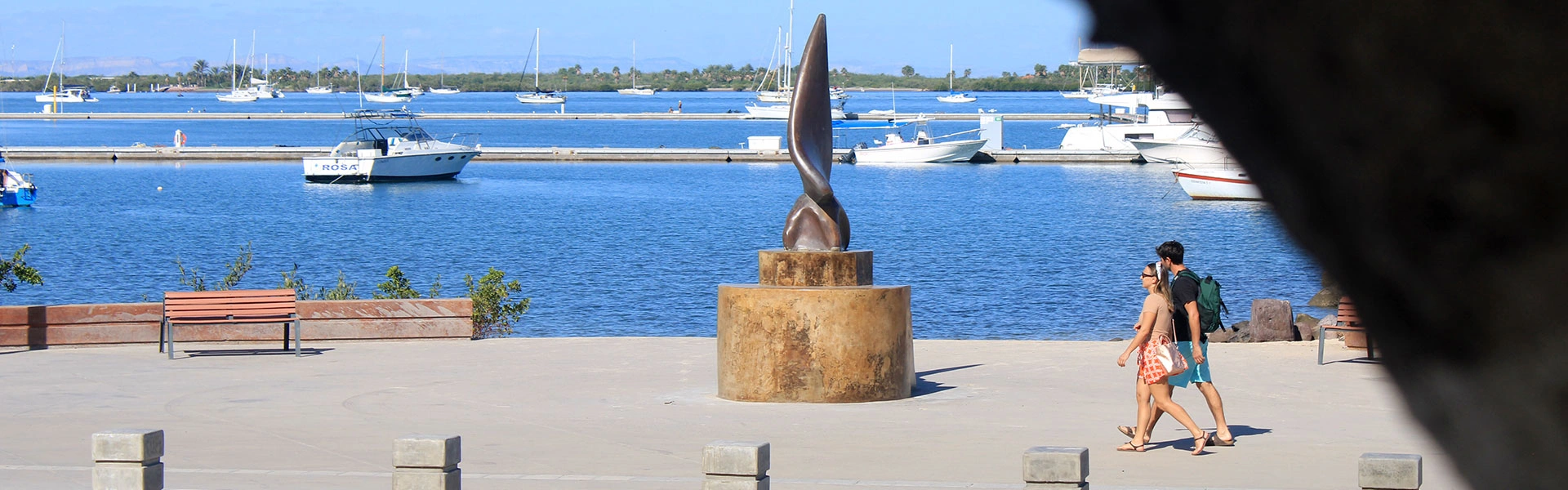
The 5-km harborfront promenade is the heart of La Paz daily life. Mornings: locals jogging and cycling. Evenings: families, food vendors, and the famous sunset light over the bay. The Malecón connects the older city center with newer restaurant and hotel strips to the north. Walking the full length takes about an hour.
Mercado Municipal
The covered municipal market in the city center is where La Paz eats on weekday mornings. The fish taco stalls in the back are the attraction — ceviche, fresh-caught fish, grilled shrimp, all prepared to order. Arrive before noon: most food stalls close by 1–2 PM, though the market itself is open until 4 PM. Bring cash.
History and Architecture
La Paz has a richer colonial history than most Baja towns. The Cathedral of Our Lady of La Paz anchors the central plaza. The city has been a pearl-diving capital, a Spanish colonial port, and the site of John Steinbeck's "Sea of Cortez" expedition. The La Paz Links history guide covers it in detail.
Marina District
The marinas north of the city center — Marina de La Paz, Marina Costa Baja, Marina Palmira — attract liveaboard sailors from around the Pacific and Sea of Cortez. The marina restaurants and bars are some of the best in the city. Good for an evening of people-watching and sailing conversation.
When to Go
Best Overall
Nov – Apr
Whale sharks and sea lions both accessible. Mild temperatures. No hurricane risk. Peak season prices Dec–Mar.
Budget Season
May – Sep
Hot, humid, and lower rates. Whale shark and sea lion seasons are closed. Hurricane risk climbs from August onward.
Sweet Spot
Oct – Nov
Both seasons reopening (whale sharks Oct 1, sea lions Sep 1). Shoulder pricing, warm ocean water, and lighter crowds.
Frequently Asked Questions
What is the best time of year to visit La Paz?
November through April is the sweet spot for most visitors. Temperatures are mild (18–27°C), the Sea of Cortez is calm, whale sharks are in season (October–May), sea lions are accessible (September–May), and hurricane risk is zero. March–April avoids peak-season crowds and prices while maintaining excellent conditions.
Can you swim with whale sharks and sea lions on the same trip?
Yes — many tour operators offer combination tours that visit Los Islotes for sea lions in the morning, then stop for whale shark snorkeling. These typically run 6–8 hours. Availability depends on season: both activities are accessible October through May. In summer (June–August), both the whale shark season and the sea lion zone are closed.
Is La Paz safe for tourists?
La Paz is widely considered one of the safer cities in Baja California Sur and is generally calm compared to tourist hotspots. Exercise standard urban precautions: avoid leaving valuables visible in rental cars, be aware of your surroundings at night, and stay informed about current travel advisories. The Malecón and marina areas are active and well-lit in the evening.
Do I need a car in La Paz?
For the city center, Malecón, and marina areas, you can manage without a car — Uber operates in La Paz. But for day trips (El Triunfo, Todos Santos, Sierra de la Laguna) and for getting to Balandra Beach, a rental car opens things up considerably. Golf courses are also easier to reach by car or taxi.
How far is La Paz from Los Cabos airport?
About 195 km, or 2–2½ hours by car via Highway 19 and Todos Santos; shared shuttles take 3+ hours. Los Cabos airport (SJD) has far more nonstop flights from the US and Canada than La Paz airport (LAP), which has one US route (Los Angeles). See the airport guide →