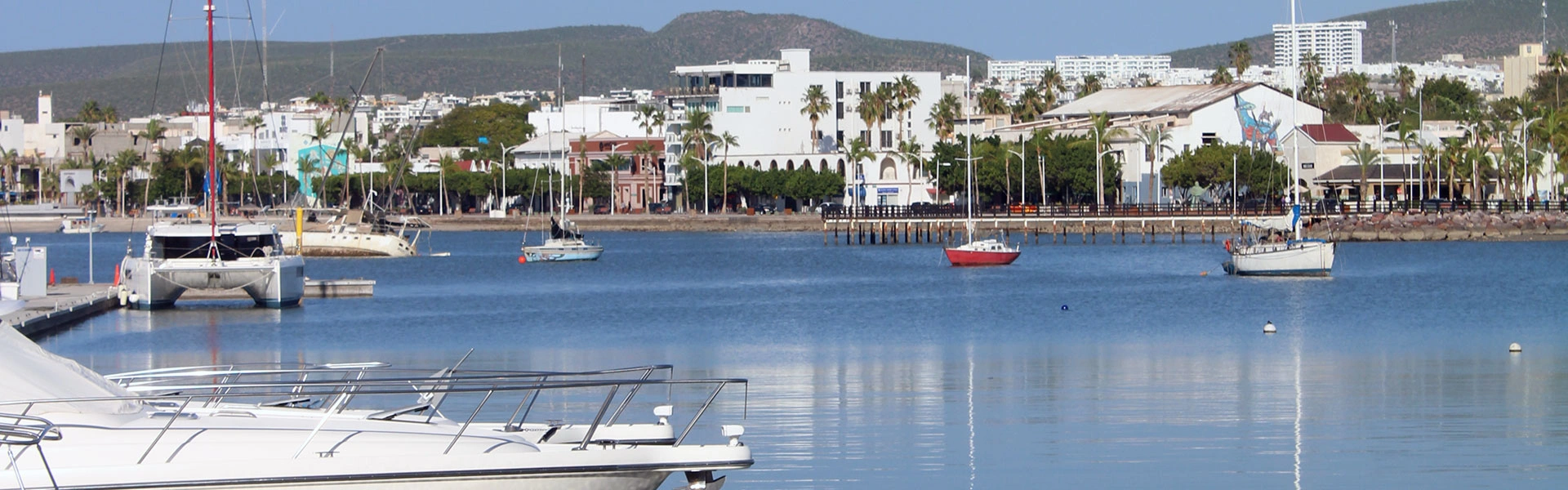
Moving to La Paz: What You Need to Know Before Relocating
La Paz is one of Mexico’s most livable coastal cities — calm, authentic, and genuinely beautiful — but a successful move depends on sorting out the legal, financial, and logistical details before you arrive. This guide covers everything from residency and neighborhoods to utilities, healthcare, and what things actually cost.
Why La Paz
La Paz is the capital of Baja California Sur with about 321,000 people in the municipality (CONAPO 2026 projection) — large enough to have everything you need, small enough that it still feels like a real city rather than a tourist economy. The Malecón waterfront is walkable and genuinely pleasant, the streets are safe, and direct access to the Sea of Cortez means whale sharks, Espíritu Santo Island, sea lions, and kayaking are part of daily life.
Compared to Los Cabos just 159 km (about 2 hours) south, La Paz costs significantly less, feels far more local, and has a growing expat and digital nomad community alongside a well-established retiree base. It runs 15–25% more expensive than mainland Mexico equivalents (Mérida, Oaxaca) due to geographic isolation — everything arrives by truck or ferry — but remains dramatically cheaper than most North American coastal cities.
See also: About La Paz for a full city overview, and Things to Do for what life actually looks like.
Move-In Checklist
Before You Go
- ✓Confirm residency route and gather qualifying documents (bank statements 6–12 months, consistent income proof)
- ✓Make a consulate appointment well in advance — lead times are longer in 2026
- ✓Arrange a scouting trip to La Paz before signing a long-term lease
- ✓Research neighborhoods based on lifestyle fit (see section below)
- ✓Arrange temporary housing for first 30–90 days (Airbnb or short-term furnished rental)
- ✓Get an international health insurance plan in place before you arrive
- ✓Research vehicle importation rules if driving down (no TIP required — Baja Peninsula is a free zone)
First Weeks in La Paz
- ✓Complete the second stage of residency (canje) at INM La PazAppointment required at citas.inm.gob.mx
- ✓Open a Mexican bank accountBBVA and Banorte are commonly used by expats; residency typically required
- ✓Set up SAPA water account and CFE electricity account
- ✓Arrange internet serviceTelmex is the primary provider; speeds vary by neighborhood
- ✓Get a Mexican SIM card for local calls and WhatsAppTelcel has best coverage in BCS
- ✓Join the "Loco La Paz Ex-Pats" Facebook group for community intel
- ✓Register with your home country's embassy or consulateRecommended for emergencies
Residency Basics — 2026 Update
Important: Individual Mexican consulates vary in how they apply and interpret residency requirements. The figures below are informed estimates based on 2026 UMA calculations and multiple current sources. Always verify exact requirements with the specific consulate where you will apply, and consider consulting an immigration attorney.
What Changed in 2026
- •UMA replaces Minimum Daily Wage as the base calculation for economic solvency. UMA 2026 = $117.31 MXN/day (3.69% increase over 2025).
- •Government processing fees approximately doubled. The cost of the five-year journey from Temporary to Permanent Residency rose from roughly 25,000 MXN (~$1,350 USD) to over 50,000 MXN (~$2,700 USD) per applicant. Family Unit applicants receive a 50% discount on fees.
Temporary Residency (2026)
- Monthly income
- ~$4,400–$4,500 USD/month
- Savings / investments
- ~$72,000–$75,000 USD (prior 12 months)
- Dependent spouse
- +~$780 USD/month added to requirement
- Duration
- 1 year initial; renewals of 1, 2, or 3 years. Permanent after 4 continuous years.
Permanent Residency (2026)
- Monthly income
- ~$7,400–$7,500 USD/month
- Savings / investments
- ~$300,000 USD (prior 12 months)
- Typical applicants
- Retirees with substantial pension or investment income
Other Routes to Residency
- •Family Unit: Married to or in a recognized partnership with a Mexican national or existing foreign resident — 50% fee discount, often an easier process
- •Property ownership: Can support an application as evidence of local ties, but property alone is not a residency category under current immigration law
- •Employment offer: Sponsored by a Mexican company; qualifies for 50% fee discount
See also: Local Government and INM La Paz for appointment booking.
Neighborhoods
Most newcomers spend their first weeks comparing neighborhoods before committing to a long-term rental. A scouting trip is strongly recommended before signing a lease. Spanish-language listings on Inmuebles24 typically run 20–30% cheaper than English-language equivalents.
Downtown / Malecón Area
Best for retirees and digital nomads who want convenience and the city's energy
Most walkable area. Restaurants, shops, and culture all within reach. Oceanview condos from ~$1,600 USD/month furnished; budget options further from the water.
Pueblo Nuevo and Mid-City Residential
Best for budget-conscious movers, families, dog owners
More local character and real neighborhood feel. Rentals can start from $325–$650 USD/month for a house. Good proximity to Chedraui, markets, and practical services.
Hillside and View Neighborhoods
Best for those prioritizing scenery and more space
Elevated positions with Sea of Cortez views. Mix of older homes and newer builds. Typically mid-range pricing with more square footage.
CostaBaja and Gated Communities
Best for those wanting amenities, security, or marina access
Higher rent, more international character. Amenities, security, marina proximity. Well-suited for sailors and those wanting resort-quality infrastructure.
Cost of Living
La Paz is affordable by North American standards, but meaningfully more expensive than mainland Mexico equivalents due to geographic isolation — everything arrives by truck or ferry. Rent is the biggest swing factor; summer electricity is the biggest budget surprise.
| Category | Budget | Mid-Range | Comfortable |
|---|---|---|---|
| Rent (1BR) | $300–$500 | $500–$900 | $1,000–$1,600+ |
| Groceries (1 person) | $150–$200 | $200–$300 | $300–$400 |
| Utilities (electricity, water, gas) | $50–$100 | $100–$200 | $200–$400+ |
| Internet | $30–$45 | $30–$45 | $30–$45 |
| Transportation | $50–$100 | $100–$200 | $200–$400 |
| Healthcare (insurance + OOP) | $100–$200 | $150–$300 | $300–$500 |
| Dining out / lifestyle | $100–$200 | $200–$400 | $400–$800 |
| Total estimate | ~$800–$1,200 | ~$1,300–$2,000 | ~$2,400–$4,000+ |
All figures in USD. Couples’ per-person costs drop significantly with shared rent and utilities. Exchange rate fluctuations affect MXN-priced items.
Utilities — The Details That Matter
Electricity: The Summer Wildcard
BCS has some of Mexico’s highest electricity rates, and summer AC use is not optional in La Paz. Electricity is the #1 bill surprise for new arrivals.
La Paz is on CFE Tarifa 1C, which provides a subsidized usage threshold of 850 kWh/month average. If your 12-month rolling average exceeds this, CFE reclassifies your account to DAC (Doméstica de Alto Consumo) — the high-consumption tier where government subsidies disappear and your per-kWh cost can triple. Once classified as DAC, your account stays there for the full rolling 12-month period even if you reduce consumption.
No AC / minimal use
$15–$30/mo
Moderate AC (6 hrs/day summer)
$50–$100/mo
Heavy AC (8–12 hrs/day)
$150–$300/mo
DAC tier
$160–$280+/cycle
To stay off DAC: use inverter-type (energy-efficient) AC units, run AC on timers rather than continuously, and be especially careful during the June–October cooling season. Some expats install solar panels to manage long-term electricity costs — several local providers offer installation.
Water (SAPA)
- •Tap water is NOT safe to drink
- •Use garrafones (5-gallon jugs delivered to door)
- •Budget ~$10–$20 USD/month for garrafones
- •Water bills otherwise relatively low
Internet (Telmex)
- •Primary landline provider in La Paz
- •Fiber available in more central areas
- •Budget ~$30–$45 USD/month
- •Speeds vary by neighborhood and building
Gas (LP/Propane)
- •Most homes use LP gas for cooking and water heating
- •Delivered by truck
- •Budget ~$20–$40 USD/month
- •Varies by household size and usage
Utility setup: SAPA (water) · CFE (electricity) · Telmex (internet) · LP gas
Healthcare
Hospital Fidepaz
Central de Especialidades Médicas. 24-hour emergency room. Accepts some US-based insurance providers. Most commonly referenced hospital for expats.
612-124-0400
AmCare
Private medical care with English-speaking staff. Popular with expats and tourists needing care in English.
612-122-5743
- •Specialist consultations typically cost 600–800 MXN (~$30–$45 USD) out of pocket
- •Private health insurance in Mexico typically costs $100–$300 USD/month depending on age and coverage level
- •US Medicare does not cover care in Mexico — have a plan in place before you arrive
- •IMSS (Mexican public health insurance) is available to legal residents; cost is income-based
- •Many medications available OTC at pharmacies that require prescriptions in the US
See Emergency Numbers for a full list of medical contacts.
Schools
Always verify school availability, language of instruction, and curriculum directly with the school before factoring it into a relocation decision. The situation can change year to year.
Mexican public schools (SEP)
Free, Spanish-language instruction. Best for families committed to full integration and fluent Spanish.
Private Mexican schools
Spanish-language with stronger facilities and smaller classes. Typically 3,000–8,000 MXN/month.
Private bilingual schools
Spanish and English instruction — most common for expat families. Visit in person; ask for enrollment and teacher credentials.
International schools (IB)
No established IB-accredited international schools with strong track records were confirmed as of early 2026. Verify current options with the expat community.
Vehicle and Driving
- •BCS is a free trade zone — no Temporary Import Permit (TIP) required for foreign-plated vehicles
- •US and Canadian-plated vehicles are common and legal to drive
- •Mexican residency required to own and register a Mexican-plated vehicle
- •La Paz is drivable from San Diego (~21 hours on Mex-1)
- •A car is strongly recommended — public transit is limited in reach and routes
Banking and Money
- •BBVA and Banorte are both well-established; residency typically required to open a full account
- •ATMs available at all major banks on the Malecón; use bank ATMs to minimize fees
- •USD widely accepted in expat-facing businesses and rental transactions
- •Wise (formerly TransferWise) is popular for reducing international wire fees
- •Cryptocurrency statements not accepted as proof of savings for residency applications
See Currency Exchange Guide for ATM tips and rate hierarchy.
Frequently Asked Questions
Do I need residency to live in La Paz long-term?
Technically, US and Canadian citizens can stay up to 180 days on a tourist permit (FMM). For stays beyond that or for the right to work, own property in your own name, or access IMSS health insurance, Temporary Residency is needed. Most long-term expats pursue Temporary Residency for the practical benefits and legal security it provides.
What are the income requirements for Mexican residency in 2026?
Temporary Residency requires roughly $4,400–$4,500 USD/month in consistent monthly income, or approximately $72,000–$75,000 USD held in savings over the prior 12 months. Permanent Residency requires roughly $7,400–$7,500 USD/month or about $300,000 in savings. These are informed estimates based on 2026 UMA calculations (UMA 2026 = $117.31 MXN/day) — exact requirements vary by consulate and should be verified with your specific applying consulate.
How much does it cost to live in La Paz per month?
Budget range: roughly $800–$1,200 USD/month for a frugal solo expat. Mid-range comfortable: $1,300–$2,000/month. Higher-end (oceanview condo, frequent dining out): $2,400–$4,000+. Rent is the biggest variable. Note that La Paz runs 15–25% more expensive than comparable mainland Mexico cities like Mérida — everything arrives by truck or ferry.
Is La Paz safe to live in?
La Paz is consistently rated among Mexico's safest cities. It has a real local economy, a strong middle class, and no significant cartel presence. The Malecón and city center are active and walkable at night. Normal precautions apply — as they do anywhere — but expats uniformly describe the city as relaxed and genuinely safe by any reasonable standard.
Can I drive my US or Canadian car in La Paz?
Yes. Baja California Sur is a free trade zone, so no Temporary Import Permit (TIP) is required for foreign-plated vehicles. It's common to see US and Canadian plates on expat vehicles. Mexican residency is required to own and register a Mexican-plated vehicle.
Is tap water safe to drink in La Paz?
No. Tap water in La Paz is not safe to drink. Residents use garrafones — 5-gallon water jugs delivered to the door — or install home filtration systems for drinking water. Budget approximately $10–$20 USD/month for garrafones.
How much is electricity in La Paz? What is the DAC rate?
La Paz is on CFE Tarifa 1C, with a subsidized threshold of 850 kWh/month average. If your 12-month rolling average exceeds this, CFE reclassifies you to DAC (Doméstica de Alto Consumo), where subsidies disappear and costs can triple. Light AC use: $50–$100/month. Heavy AC (8–12 hours/day): $150–$300/month. DAC tier: bills can reach $160–$280+ per billing cycle. Electricity is the #1 budget surprise for new arrivals.
Are there English-speaking doctors in La Paz?
Yes. Hospital Fidepaz (Central de Especialidades Médicas) is the hospital most referenced for expats and has 24-hour emergency care (612-124-0400). AmCare offers private care with English-speaking staff (612-122-5743). Specialist consultations typically cost 600–800 MXN (~$30–$45 USD) out of pocket.
What internet providers are available in La Paz?
Telmex is the primary landline internet provider. Fiber is available in more central areas. Budget $30–$45 USD/month for standard residential service. Speeds and reliability vary significantly by neighborhood. Many expats use a Telcel LTE hotspot as a backup.
What is the best neighborhood in La Paz for expats?
It depends on lifestyle priorities. Downtown and the Malecón area are best for walkability and convenience. Pueblo Nuevo and mid-city residential areas offer more local character and better value. CostaBaja and gated communities offer amenities and marina proximity at higher cost. A scouting trip before committing to a long-term lease is strongly recommended.